
7 Best On Grid Solar Systems for 2026?
A grid-connected solar array can turn a bright roof into useful daytime electricity, while still relying on the utility network after sunset. The right On Grid Solar System depends on more than panel output. Roof direction, shade, inverter quality, local service, and export rules can change the value of a seemingly similar package. Small details matter. A chimney shadow at 4 p.m. can affect a string of panels more than a glossy brochure suggests.
Energy expert Amory Lovins, physicist and co-founder of the Rocky Mountain Institute, is widely associated with the reminder: “The cheapest energy is the energy you don’t use.” It is a useful lens for comparing solar systems. Before focusing on maximum capacity, consider insulation, appliance schedules, and when your household uses power. Solar should fit the home, not just the sales estimate.
This guide examines seven leading on-grid options for 2026, comparing efficiency, inverter design, monitoring, warranty terms, and installer support. Product availability and prices vary by region, and a model that performs well in one climate may not suit another. That part is less tidy. Treat the list as a practical shortlist, then ask installers for site-specific production estimates and written assumptions. Check shade, roof condition, and expected daytime use before signing. A careful comparison can reveal trade-offs that headline wattage alone misses.
How On-Grid Solar Systems Work
7 Best On-Grid Solar Systems for 2026?
How On-Grid Solar Systems Work
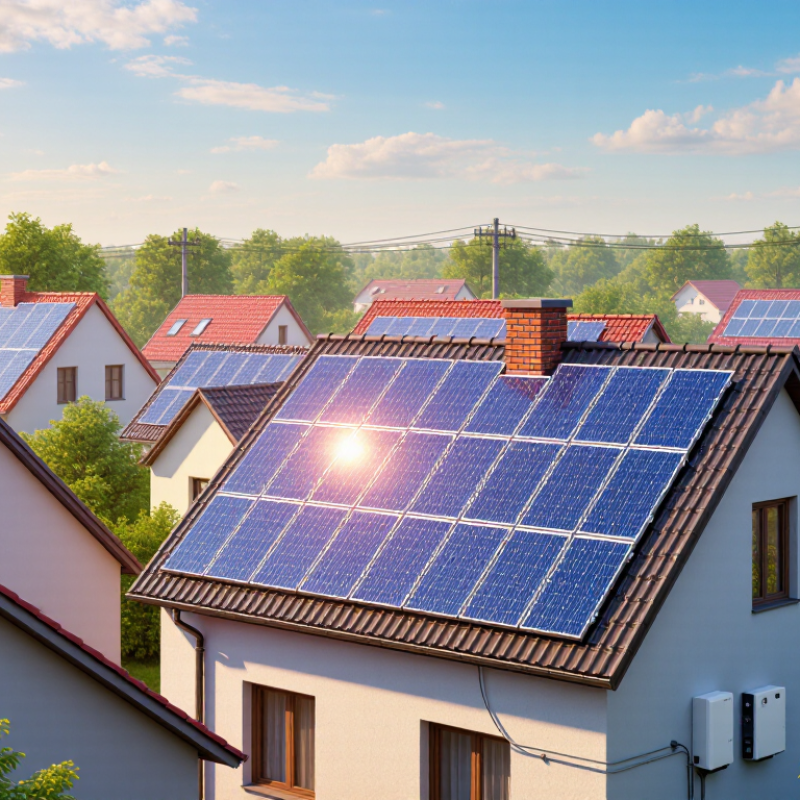
An on-grid solar system connects rooftop panels to a building’s electrical circuits and the public grid. Panels produce direct current, or DC. An inverter converts it into alternating current, or AC, and synchronizes its voltage and frequency with the grid. Appliances use solar electricity when it is available; surplus power may flow outward through a bidirectional meter. After sunset, the building draws electricity from the grid. Simple in principle. Your actual savings depend on local export credits, utility rates, roof shade, and household use.
The grid is not a backup battery. Most standard grid-connected inverters shut down during an outage to prevent electricity from flowing onto lines that workers may be repairing. Backup power requires compatible equipment, usually including storage and a way to isolate the home safely. The IEA PVPS Snapshot of Global PV Markets 2025 reports that worldwide photovoltaic capacity exceeded 2.2 terawatts by the end of 2024, reflecting how widely this grid-connected technology is used. Still, scale does not guarantee a good fit for every roof. A shaded panel, poorly placed meter, or mismatched daytime demand can reduce the value of a system. This part is easy to overlook. Check local interconnection rules and the utility’s export compensation before comparing system designs.
