
2026 Top TV Stand With Fireplace Types Buyers Want
In 2026, buyers are comparing fireplace TV stands for more than their appearance. A Tv Stand With Fireplace can add warmth, storage, and a focal point to a living room. Looks matter. So do measurements, heat settings, materials, and the TV’s weight. A stand that seems perfect online may crowd a small room or leave too little space for cables. Measure the wall, viewing distance, and available floor space before comparing styles. Check each product’s stated weight capacity and the fireplace insert’s operating requirements.
Popular formats include compact consoles, wide entertainment units, corner stands, and models with a more traditional mantel profile. Compact designs can suit apartments, though shelf space may be limited. Wide units offer room for devices and décor, but they need a generous wall. Corner stands can use awkward layouts well, yet screen placement may feel less natural. Wall-mounted styles create a lighter look, but installation and cable planning deserve careful attention. Each type solves a different problem; none is ideal for every home.
One detail is easy to overlook. An electric fireplace may warm a seating area, but it should not be treated as a replacement for a home’s primary heating system unless the manufacturer explicitly supports that use. Follow the manual’s clearance guidance, and keep vents unobstructed. This guide compares the types buyers are considering, with practical notes on room fit, storage, appearance, and everyday use. Some trade-offs are less glamorous than the product photos suggest. That is worth remembering.
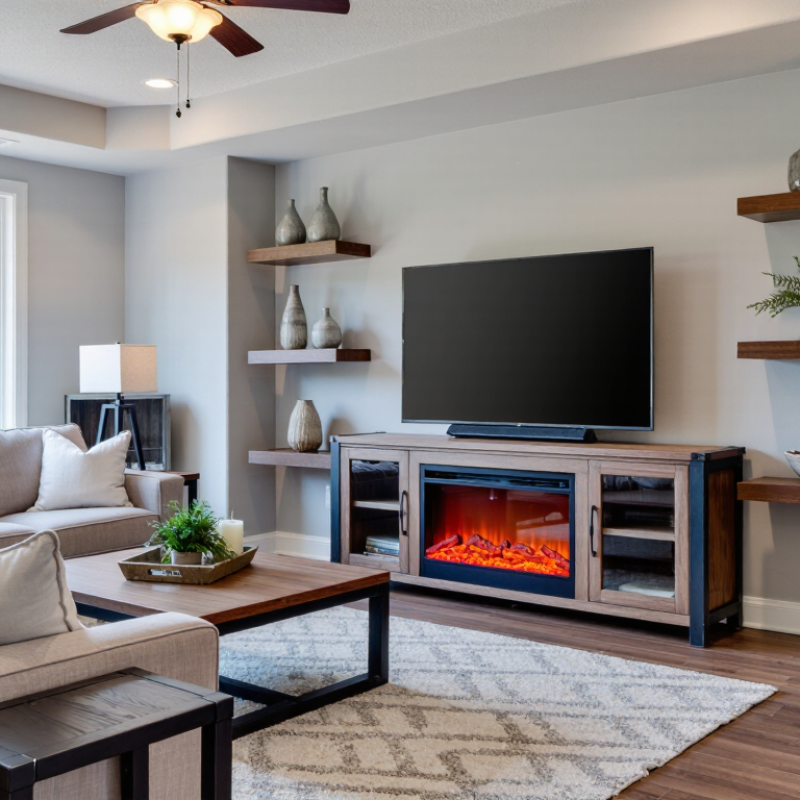
What Is a TV Stand With Fireplace and How Does It Work?
A TV stand with a fireplace combines media storage, television support, and an electric heating unit in one piece of furniture. The fireplace usually creates simulated flames with LED lights, reflective panels, and molded logs. Some models also produce heat through a ceramic or infrared element.
The heater pulls in room air, warms it, and releases it through a front or lower vent. A thermostat may maintain a selected temperature, while a remote controls heat, flame brightness, and timing. Many units provide visual flames without heat, which helps during warmer months. The actual heating area depends on wattage, room insulation, ceiling height, and drafts. A product rated for 400 square feet may perform differently in a cold, open living room.
I used to assume the fireplace made the stand difficult to maintain. Dust around the intake proved more important. Regularly cleaning that area supports steady airflow and reduces strain on the heater. Buyers should check the TV clearance, stand weight limit, cord length, and required outlet rating. The unit should sit on a level surface, away from curtains and blocked vents. Heat rising toward the screen deserves attention, especially with a large television mounted directly above. Some designs look convincing, but their storage may be shallow or poorly ventilated. That trade-off is easy to miss in product photos.
