2026 Top Padlock Lockout Suppliers for Global Buyers
Choosing reliable Padlock Lockout suppliers in 2026 requires more than comparing catalog prices. Global buyers need evidence of product quality, manufacturing consistency, technical support, and responsible business practices. A suitable supplier should offer durable lock bodies, clearly marked tags, corrosion-resistant shackles, and compatible accessories for different workplace environments. Small details matter. A loose shackle can weaken confidence.
Richard A. Fairfax, former director of OSHA’s Directorate of Enforcement Programs, emphasized the practical purpose of energy control: “Lockout/tagout procedures must be specific to the machine and the task.” This principle remains valuable when reviewing international suppliers. A polished website does not prove dependable production. Buyers should examine test records, factory experience, material specifications, customization capability, and after-sales communication. Sample orders can reveal more than impressive brochures.
This guide reviews leading Padlock Lockout suppliers for global buyers, focusing on measurable qualities rather than marketing claims. It considers product range, private-label support, export experience, quality controls, and response speed. Certification documents also deserve careful checking. They should match the actual product and manufacturing site.
No ranking is perfect. Market information changes. Supplier performance can vary between batches. Therefore, buyers should verify current evidence before placing large orders. A lower quotation may conceal inconsistent plating or delayed replacement parts. That risk is easy to overlook. Strong sourcing decisions combine technical judgment, practical testing, and honest reflection about workplace needs.
What Is a Padlock Lockout and Why Is It Used?
2026 Top Padlock Lockout Suppliers for Global Buyers
What Is a Padlock Lockout and Why Is It Used?
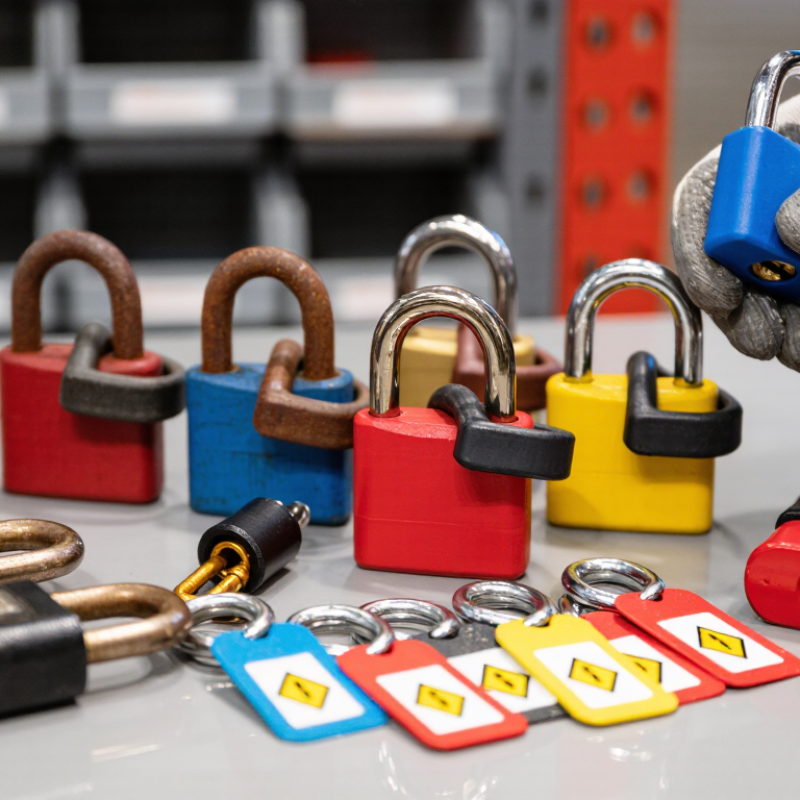
A padlock lockout is a personal device that physically blocks an energy-isolating mechanism. It prevents machinery from restarting during servicing, cleaning, or maintenance. The padlock holds a valve cover, breaker handle, or hasp in a safe position. Each authorized worker should apply a uniquely keyed lock. That rule makes ownership visible at the equipment.
Energy may remain electrical, hydraulic, pneumatic, mechanical, or thermal. Stored pressure and gravity are easy to underestimate. OSHA states that effective hazardous-energy control could prevent about 120 fatalities and 50,000 injuries annually in the United States. The ILO reported nearly three million work-related deaths and 395 million nonfatal injuries worldwide in 2023. Those figures do not prove every incident involves lockout failure. They show why isolation deserves disciplined attention.
For global buyers, a useful specification includes shackle clearance, body material, corrosion resistance, temperature range, key control, and identification space. A suitable device must fit the actual isolator, not merely resemble a catalog photograph. Field experience suggests cheap hardware can become expensive when brittle plastic or poor fit delays work. A lock is not a complete safety system. Training, verified zero energy, and site procedures remain essential. I still see one weak assumption: visible hardware alone cannot prove isolation. Verification must happen before hands enter danger.
2026 Top Padlock Lockout Suppliers for Global Buyers
What Is a Padlock Lockout and Why Is It Used?
A padlock lockout is a safety method that uses a personal padlock and lockout device to prevent hazardous machinery from being energized during servicing or maintenance. The chart presents the eight-step lockout/tagout sequence described in OSHA 29 CFR 1910.147 Appendix A. The values show the required sequence order, not incident frequency or supplier performance.
Key Factors for Evaluating Global Padlock Lockout Suppliers
2026 Top Padlock Lockout Suppliers for Global Buyers
Key Factors for Evaluating Global Padlock Lockout Suppliers
Choosing a padlock lockout supplier requires more than comparing unit prices. Experienced buyers inspect samples, production records, and response speed before placing large orders. Check the shackle material, body strength, key control, and resistance to corrosion. A lock used near chemical equipment needs different protection from one used indoors.
Ask for clear test reports and traceable batch numbers. Reports should identify the testing method, date, and responsible laboratory. Factory audits can reveal practical details, including storage conditions, assembly cleanliness, and inspection points. Request evidence of quality training, process control, and corrective actions. Good suppliers explain limits without exaggeration.
Small details matter.
Evaluate lead times, minimum order quantities, packaging, export documents, and replacement procedures. Confirm whether specifications remain stable between sample approval and mass production. A supplier should communicate design changes before shipment, not after complaints. Independent references can support claims, but they should not replace physical testing. A pilot order is safer than immediate bulk purchasing. Low prices sometimes hide inconsistent tolerances or weak packaging. No supplier performs perfectly, including established factories. Leave room for review, improvement, and a second inspection before expanding the order.
Top Padlock Lockout Suppliers by Product Range and Market Coverage
Global buyers evaluating padlock lockout suppliers in 2026 should compare product range, not catalogue size alone. Reliable suppliers typically offer keyed-alike and keyed-different padlocks, non-conductive bodies, stainless steel options, lockout hasps, tags, and circuit breaker accessories. Some also provide valve covers, cable systems, and group lockout stations. Product depth matters when one maintenance team handles electrical panels, compressed-air lines, and chemical process valves.
Material selection deserves close attention. Nylon padlocks suit many indoor electrical applications, while reinforced or stainless designs may perform better in wet, dusty, or cold workplaces. Clear key identification can reduce search time during shift changes. However, color coding is not universal. Buyers should confirm available colors, engraving, key control, test records, and technical documents before ordering. Small details matter.
Market coverage reveals another difference between suppliers. Strong exporters usually support regional distributors, multilingual documents, sample orders, and stable replenishment programs. They should explain lead times, packaging, replacement parts, and after-sales procedures clearly. Local stock can reduce delays, but broad coverage does not always mean dependable service. A supplier may list many countries yet lack practical support there. Buyers should test communication with a small order first. That step may expose weak documentation or inconsistent quality. Procurement teams should also review workplace requirements with qualified safety professionals, because one standard product range may not fit every site.
How Global Buyers Can Select and Purchase the Right Supplier
2026 Top Padlock Lockout Suppliers for Global Buyers
How Global Buyers Can Select and Purchase the Right Supplier
Selecting a padlock lockout supplier requires more than comparing unit prices. The ILO estimates 2.93 million work-related deaths and 395 million non-fatal injuries each year. Reliable lockout equipment supports safer maintenance routines and clearer energy-control procedures. Look for suppliers with documented testing, traceable materials, and stable production capacity.
The ISO Survey 2023 recorded 185,914 valid ISO 45001 certificates worldwide. This figure reflects growing attention to structured occupational safety management. However, certification alone does not prove product quality. Ask for batch inspection records, corrosion-test results, temperature limits, and sample approvals. A strong supplier should explain how nylon bodies, steel shackles, labels, and key systems perform in dusty workshops or humid plants. I have seen buyers accept attractive samples, then discover inconsistent dimensions in later shipments. That risk deserves attention.
Tips: Request three production samples. Compare shackle diameter, key operation, label durability, and color consistency. Confirm packaging dimensions before freight booking. Ask whether replacement parts remain available. Review the supplier’s audit history, response time, and corrective-action process. Do not rely on polished photos.
Purchasing terms also matter. Confirm minimum order quantities, lead times, inspection rights, and documentation before signing. Use a staged order when the supplier is new. A small first shipment may cost more per unit, but it reveals practical weaknesses early. Recheck the decision after field testing. A supplier that welcomes criticism is often more dependable than one promising perfection.

