
2026 Top Mechanical Zinc French Washer Types for Buyers
Choosing the right Mechanical zinc French washer can improve load distribution, protect mating surfaces, and support a more dependable assembly. Yet washer names and dimensions can vary between suppliers. Buyers should confirm the drawing, standard, and product description before comparing quotes.
This 2026 guide examines common options, including flat, wide-pattern, and locking washers where suppliers classify them under French washer listings. It explains how outside diameter, thickness, hole size, and material affect fit and performance. Small details matter. A washer that looks suitable may still interfere with a recessed fastener or fail to cover a soft surface adequately.
Zinc finishes can help protect steel from corrosion in ordinary service, but they are not a universal substitute for stainless steel or a specified protective system. Check the coating type, stated thickness, and intended environment. Fit comes first. Also review packaging, dimensional tolerances, traceability, and inspection documents when consistency matters across production runs. A clear sample check can reveal burrs, uneven plating, or edge damage before a larger order ships.
No catalog label alone proves suitability. Compare measurable specifications, request clarification when terminology is unclear, and test the washer in the actual joint. Even experienced buyers can miss a small mismatch. That is worth admitting. The sections ahead offer a practical framework for comparing washer types and selecting a reliable option for the application.
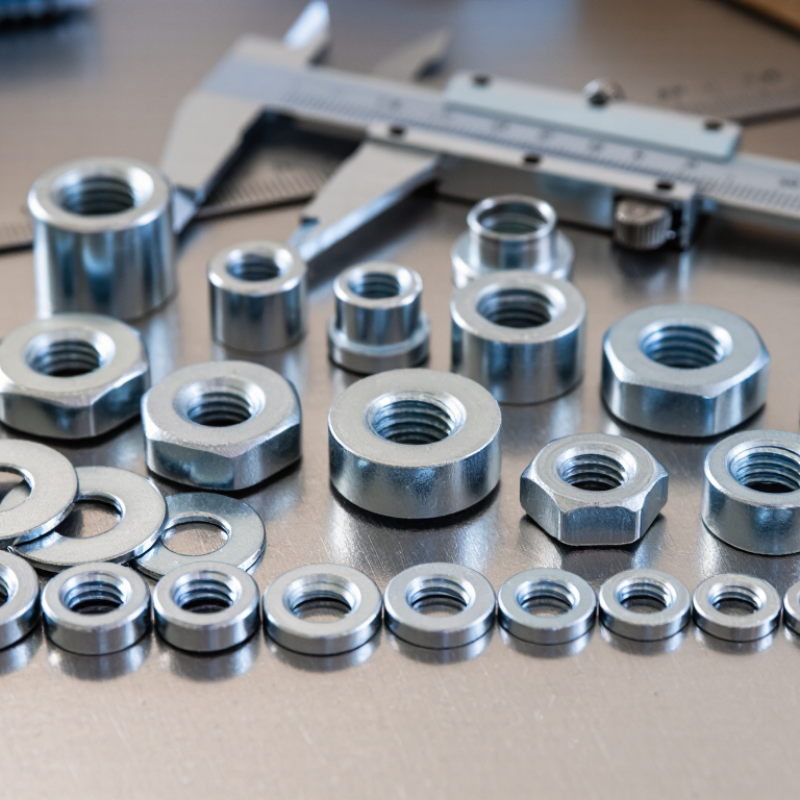
What Defines a Mechanical Zinc French Washer in Buyer Specifications?
A mechanical zinc French washer should be specified by measurable geometry, base material, and coating—not by its catalog name alone. “French washer” can describe a broad, thin washer, but dimensions may vary by supplier. State the outer diameter, inner diameter, thickness, and permitted tolerances. For example, a washer with a 30 mm outer diameter and a 10 mm bore may spread load differently from a standard narrow washer. Check the mating bolt and contact surface, too. Fit matters.
Then define “mechanical zinc” precisely. Buyers should confirm whether the coating is mechanically deposited or electroplated, and request its thickness, appearance, and corrosion-test requirement. ISO 4042:2022 addresses electroplated coatings on fasteners; ASTM F1941/F1941M covers electrodeposited coatings on threaded fasteners. These references help distinguish coating processes, but they do not replace a washer-specific drawing or purchase specification.
Ask suppliers for coating records and inspection results. Small differences count. A coating requirement without a test method leaves room for interpretation. That detail is easy to miss.
For outdoor or damp service, state the exposure conditions rather than simply asking for “zinc plated.” A sample inspection can reveal burrs, uneven coating, or a tight bore. Not glamorous, but useful.
