
2026 Top Heavy Duty Truck Radiator Types for Buyers
Choosing a Heavy duty truck radiator in 2026 means matching the part to the truck’s actual work, not just its model name. A long-haul tractor, a vocational dump truck, and a delivery vehicle face different cooling demands. Even two trucks with the same engine may use different radiator dimensions, connections, or cooling-package layouts. Small mismatches matter. A hose outlet positioned a few inches off can turn an apparent fit into workshop delays.
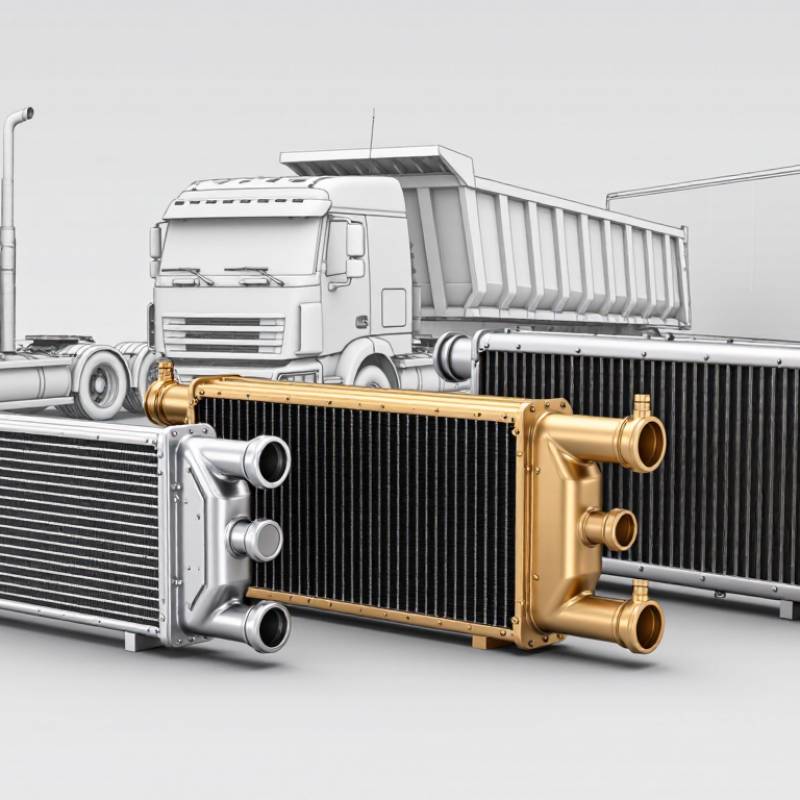
This guide introduces common radiator types buyers may encounter, including aluminum and copper-brass construction, along with crossflow and downflow designs. Each has practical trade-offs in weight, heat transfer, repairability, and compatibility. There is no universal winner. Not always. Selection should account for engine specifications, operating conditions, available airflow, and the manufacturer’s fitment data. Buyers should also check core dimensions, mounting points, inlet and outlet locations, pressure requirements, and warranty terms before ordering. These details are easy to overlook when comparing prices alone.
The sections ahead offer a clear framework for evaluating options and asking suppliers more precise questions. Confirming the exact truck configuration is essential; year, make, and model may not be enough. Product specifications and vehicle requirements should guide the final choice, rather than broad claims about one material being best for every fleet. That sounds simple, but it rarely is. A careful comparison can help reduce installation problems and support dependable cooling under demanding service.
How Heavy-Duty Truck Radiators Control Engine Temperature
2026 Top Heavy Duty Truck Radiator Types for Buyers
A heavy-duty truck radiator controls engine temperature by moving heat from circulating coolant into passing air. The water pump sends hot coolant from the engine through narrow radiator tubes. Fins attached to those tubes spread heat across a larger surface. Heat has to leave. The fan and forward motion draw air through the core, carrying warmth away before the coolant returns to the engine. A thermostat helps regulate when coolant flows through the radiator.
Core materials and construction affect heat transfer, durability, weight, and repair options. Aluminum radiators are generally lighter, while copper-brass designs can offer different repair characteristics. Either choice needs to suit the truck’s engine, cooling package, and working conditions. A radiator that looks large enough may still struggle if its tubes are clogged, fins are bent, or airflow is restricted by debris. Dust, chaff, and oily film can build up between the fins.
For buyers, compare the radiator’s fit, core dimensions, tube and fin construction, and compatibility with the existing cooling system. Check operating temperatures under realistic loads, such as a slow climb with a full trailer, rather than relying only on idle performance. Also inspect the fan, thermostat, coolant condition, and hoses; a new radiator cannot correct every overheating cause. It is easy to overlook airflow. Even a well-built core may perform poorly when the fan shroud is damaged or the fins are packed with dirt.
