
2026 Top Fusion Bonded Epoxy Pipe Suppliers?
Choosing a Fusion Bonded Epoxy Pipe supplier in 2026 requires more than comparing prices or catalog claims. The right choice depends on the fluid, operating temperature, pressure, pipe dimensions, and installation environment. A coating suited to a buried water line may not fit a demanding industrial process. Details matter.
This guide examines supplier capabilities that buyers can verify. Look for clear information on surface preparation, coating thickness, curing controls, adhesion testing, and inspection records. Ask how the supplier handles flange edges, bends, and other areas where coverage can be harder to maintain. Request sample quality documents and confirm that product specifications match the project requirements. A polished brochure is useful, but traceable test results are stronger evidence.
The “top” supplier is not automatically the largest or least expensive. Reliable delivery, responsive technical support, and consistent production can matter just as much as headline pricing. A low quote can look persuasive, until coating limits or delivery assumptions become clear. Not always. Buyers should compare equivalent specifications and ask direct questions before shortlisting manufacturers. This article offers a practical framework for assessing suppliers, while recognizing that no ranking fits every project. Some details may remain uncertain until drawings, service conditions, and inspection needs are reviewed. That is worth acknowledging. A careful selection process can reduce avoidable surprises, but it cannot replace project-specific engineering judgment.
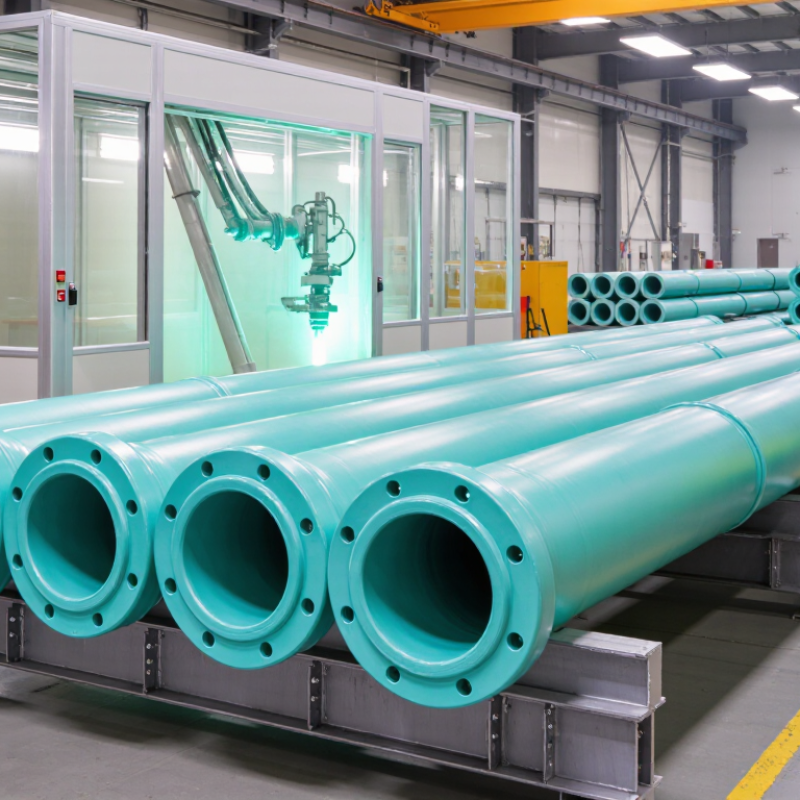
What Fusion-Bonded Epoxy Pipes Are and How They Are Made
Fusion-bonded epoxy pipe starts as a steel pipe with a carefully prepared surface. Workers remove rust, oil, and mill scale, often using abrasive blasting. The cleaned steel should show a consistent, rough texture. That profile gives the coating something to grip. Even a small patch of contamination can weaken adhesion, though the problem may not be obvious at a glance.
The pipe is heated, then fine epoxy powder is applied, commonly by electrostatic spray. Heat melts and cures the powder into a continuous layer bonded to the steel. Depending on the application, coating may cover the pipe’s interior, exterior, or both. Operators control temperature, powder delivery, and line speed. Too little heat can leave an under-cured film; too much may affect coating quality. It is a narrow process window.
After cooling, inspectors check coating thickness, adhesion, and pinholes, sometimes called holidays. A pipe can look smooth and still contain a tiny defect. That is why visual checks alone are not enough. Fusion-bonded epoxy helps protect steel from corrosion, but performance also depends on service temperature, handling, installation, and the surrounding environment. The coating is not a cure-all. Careful inspection matters, and real-world conditions can still surprise even a well-run production line.
