
2026 Top Ceramic Radiant Tube Heating Wire Types for Buyers?
Choosing a Ceramic Radiant Tube Heating Wire is not just a matter of comparing maximum temperature ratings. Buyers also need to consider tube dimensions, furnace atmosphere, heating cycles, and the required service life. A wire that performs well in a dry, steady process may behave differently under frequent starts or in a corrosive environment. Small details matter.
Common options include iron-chromium-aluminum (FeCrAl) and nickel-chromium (NiCr) resistance alloys. FeCrAl is often considered for high-temperature applications, while NiCr can suit systems that value ductility and stable resistance. Actual performance depends on alloy grade, wire diameter, coil design, and installation conditions. A catalog rating alone is not enough.
This guide compares the main wire types buyers may encounter in 2026 and explains what to check before requesting a quotation. Look closely at the element’s operating temperature, electrical load, atmosphere compatibility, and support arrangement inside the ceramic tube. Ask suppliers for technical data and confirm that quoted values match your working conditions. That sounds simple. It isn’t. A tidy specification sheet can still leave out details such as cycling frequency or recommended element spacing. There is no universal best wire; the right choice follows the process, not the product label. If your operating data is incomplete, pause and verify it before selecting an alloy.
Ceramic Radiant Tube Heating: Components and Operating Principles
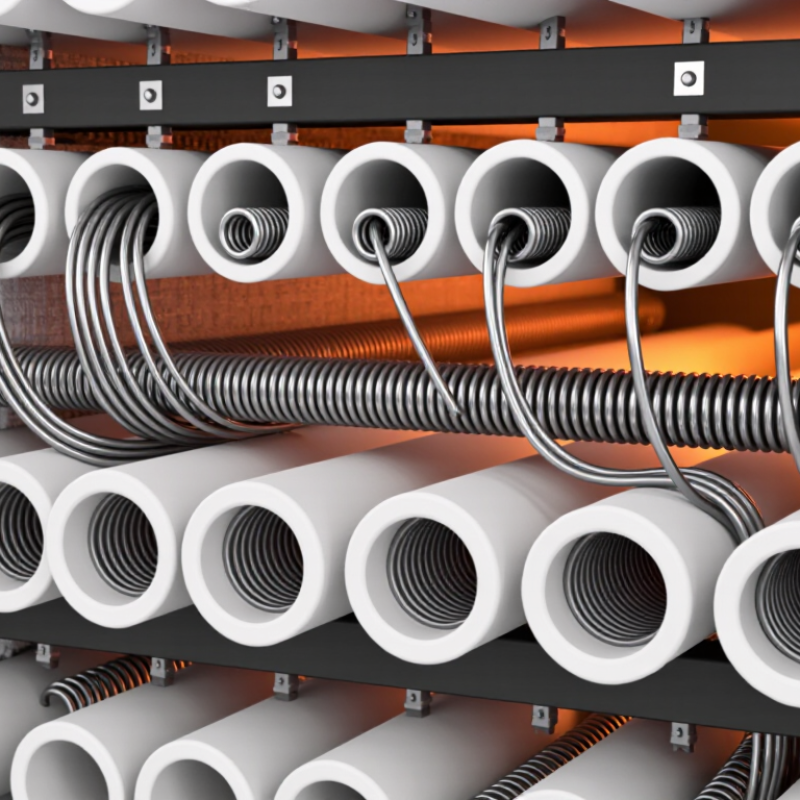
A ceramic radiant tube heater contains a ceramic tube, a resistance heating wire, electrical terminals, and mounting supports. The wire sits inside the tube, held in position by ceramic insulators. When current passes through it, electrical resistance produces heat. The tube absorbs some of that heat and radiates energy toward nearby surfaces. Warm parts, not just warm air.
The tube’s shape and placement influence how evenly heat reaches a work area. Reflectors can direct radiation toward a target, while a temperature sensor and controller help regulate output. In use, check that the wire remains supported and that terminals are suitable for the operating temperature. Small installation details matter. A loose support can create uneven heating or shorten component life.
Buyers comparing heating wire types should consider operating temperature, wire diameter, electrical load, and compatibility with the tube and supports. These factors affect warm-up time and service life. A specification sheet is useful, but it cannot describe every installation condition. Dust, airflow, and mounting distance may change performance. Even a carefully selected assembly can need adjustment after real operating tests. That is worth planning for.
