
2026 Top Aluminium Winding Wire Suppliers for Buyers
Choosing a supplier in 2026 takes more than comparing prices. Aluminium Winding Wire buyers need dependable material, consistent production, and clear technical documentation. A quotation may look attractive, yet differences in conductor grade, wire diameter, temper, and insulation can affect winding performance. Small variations matter.
A practical supplier review starts with the application. Check whether the wire suits your winding process, operating temperature, and electrical requirements. Ask for product specifications, batch test reports, and details about quality controls. Request samples when possible. Compare them against your own requirements rather than relying on a product description alone. Documentation helps, but it does not replace careful evaluation.
This guide introduces suppliers for buyers seeking reliable sourcing options in 2026. It considers product range, manufacturing capability, customization, delivery terms, and technical support. Buyers should also clarify minimum order quantities, production lead times, packaging, and how concerns are handled after delivery. These details can shape the real cost of a purchase.
No supplier is right for every project. A large manufacturer may offer capacity, while a specialized producer may provide closer technical communication. That trade-off deserves attention. Availability, specifications, and service can change, so confirm current information directly with each company. Treat rankings as a starting point, not a guarantee. Compare carefully.
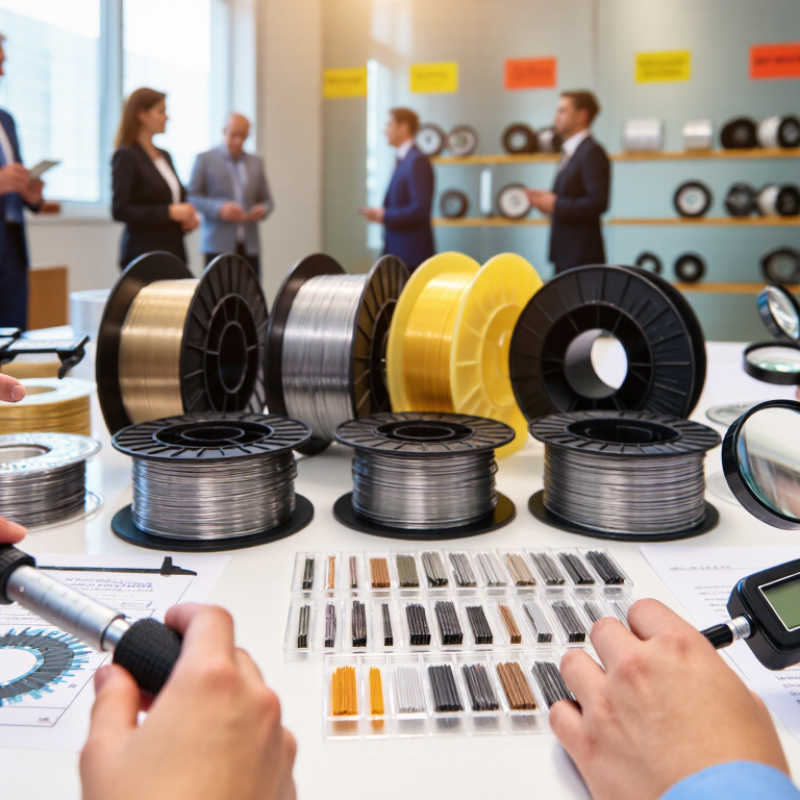
What Aluminium Winding Wire Is and How It Is Used
Aluminium winding wire is an electrical conductor used inside motors, transformers, generators, and other electromagnetic equipment. It is typically drawn into round or rectangular wire, then insulated with enamel, paper, or another suitable coating. The insulation keeps adjacent turns from shorting when tightly wound. In a transformer, the wire forms coils around a magnetic core; in a motor, it sits in stator or rotor slots.
The key trade-off is weight versus conductivity. The Aluminum Association’s Aluminum Electrical Conductor Handbook gives aluminium conductivity at about 61% of copper’s by volume, while aluminium weighs roughly one-third as much. It is lighter. For the same electrical resistance, designers generally need a larger aluminium cross-section, so slot space and winding geometry matter. Connections also deserve close attention: aluminium’s surface oxide and its expansion with temperature can affect joint performance if the design or assembly is poor.
Aluminium Institute production statistics report about 70.6 million metric tonnes of global primary aluminium output in 2023. That figure indicates a substantial material supply base, but it does not guarantee winding-wire availability or quality. Buyers should check conductor dimensions, insulation class, resistance, and test records against the intended duty. A wire suitable for a dry, low-temperature motor may not suit a compact transformer with frequent thermal cycling. The detail is easy to miss.
2026 Top Aluminium Winding Wire Suppliers for Buyers - What Aluminium Winding Wire Is and How It Is Used
Supplier-neutral buying guide: compare manufacturers against the documented specifications, test reports, production capabilities, and delivery requirements below. No supplier rankings or company-specific claims are implied.
| Evaluation Area | What to Check | Useful Technical or Purchasing Data | Why It Matters |
|---|---|---|---|
| Conductor material | Confirm the aluminium alloy, temper, and applicable product specification on the quotation and certificate. | Electrical winding conductors commonly use high-conductivity aluminium. Conductivity and mechanical properties depend on alloy, temper, and applicable specification. | Material selection affects electrical resistance, drawability, jointing, and winding performance. |
| Electrical properties | Request the guaranteed conductivity or resistivity, test temperature, and test method. | For reference, the resistivity of pure aluminium is approximately 2.82 × 10⁻⁸ Ω·m at 20°C; actual conductor values depend on material and specification. | Resistance determines conductor losses and must be considered when designing or replacing a winding. |
| Wire dimensions | Specify round or rectangular profile, nominal dimensions, dimensional tolerances, and permitted out-of-roundness. | Round wire is specified by diameter; rectangular wire is generally specified by width and thickness. Tolerances should be agreed in the purchase specification. | Consistent dimensions help maintain winding space, turn count, and insulation clearance. |
| Insulation system | Identify bare or insulated wire and, for enamelled wire, the insulation type, thermal class, and test requirements. | Enamelled winding wire is available in different insulation systems. The required thermal class and performance tests should match the equipment design and governing specification. | Insulation provides turn-to-turn electrical separation and must suit operating temperature and manufacturing processes. |
| Standards and inspection | Ask which standard and edition apply, and request inspection records or a certificate of conformity. | IEC 60317 series standards cover specifications for particular types of winding wire. The relevant part depends on conductor material, shape, and insulation type. | A clearly identified standard makes technical comparisons and incoming quality checks more reliable. |
| Typical applications | Confirm that the wire is intended for the equipment and winding process in question. | Aluminium winding wire is used in electrical equipment such as transformers, motors, and other electromagnetic coils. | Application, thermal duty, winding geometry, and connection method influence the required wire specification. |
| Joining and termination | Agree on the connection method and verify compatibility with the conductor and terminal materials. | Aluminium connections require suitable joining practices and attention to oxide management and joint design. | Connection quality affects contact resistance, heating, and long-term electrical reliability. |
| Packaging and traceability | Specify spool or coil format, net weight, protective packaging, labels, and batch identification. | Request traceability from the delivered package to the production lot and its inspection documentation. | Appropriate packaging protects wire during handling, while traceability supports quality control and issue investigation. |
| Commercial qualification | Compare samples, production capacity, lead time, minimum order quantity, and delivery terms. | Require comparable quotations based on the same conductor dimensions, insulation, tolerances, packaging, and delivery requirements. | Like-for-like comparisons reduce the risk of selecting a product that differs from the intended specification. |
Technical values are reference information, not a substitute for a product specification. Confirm material properties, tolerances, applicable standards, and test requirements with the supplier before purchase.
