
2026 Best Worm Gears for Global Buyers?
Worm Gears remain a practical choice when machinery needs substantial speed reduction in a compact space. For global buyers, the best option in 2026 is not simply the one with the lowest quoted price. It is the gear set that matches the application, operating conditions, and supplier’s demonstrated capabilities.
A useful comparison starts with the required ratio, input speed, torque, duty cycle, and available mounting space. Material choices matter, too. A bronze wheel paired with a hardened steel worm may suit some demanding applications, but suitability depends on load, lubrication, heat, and service intervals. Ask for dimensional drawings, stated efficiency, backlash information, and inspection records. A neat catalog is not proof of consistent production. Request evidence that relates to the actual model being quoted.
Global sourcing adds practical questions. Can the supplier confirm tolerances, packaging, lead times, and technical support in writing? Are spare parts available? Check whether samples or test reports can help verify fit before placing a larger order. Small errors matter. A slightly mismatched center distance can complicate installation, while poor lubrication can shorten service life. No shortlist can settle every case; real operating data is often incomplete, and supplier claims deserve careful review. This guide compares selection criteria and buying considerations so readers can judge available Worm Gears against their own equipment needs—not a universal ranking.
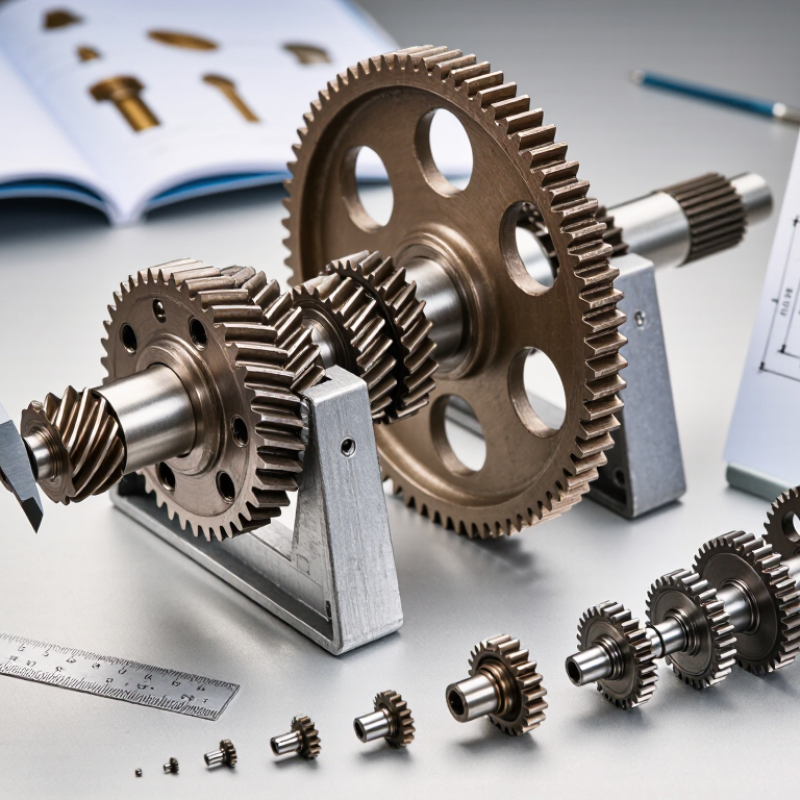
Worm Gear Fundamentals: Right-Angle Shafts, Sliding Contact, and High Ratios
Worm gears pair a screw-like worm with a toothed wheel, usually turning shafts through 90 degrees. This layout fits compact drives where space is limited. One input turn can produce a small output movement, so a single stage can provide a high reduction ratio. That is the appeal.
Unlike many gear pairs, worm teeth slide across one another as they mesh. This sliding contact can create heat and friction, especially under continuous load or poor lubrication. A gearbox that feels quiet at low speed may still run hot after an hour. Check lubricant type, fill level, operating temperature, and duty cycle against the supplier’s specifications. Not optional.
Right-angle output and high ratios do not guarantee a good fit. Efficiency may be lower than with some other gear arrangements, and self-locking should never be assumed from appearance alone. Lead angle, load, lubricant, wear, and vibration all matter. Measure the shaft arrangement and mounting space, then compare rated torque and thermal limits. It is easy to overvalue compactness. A slightly larger reducer may waste less energy and last longer in a hot, nonstop application.
