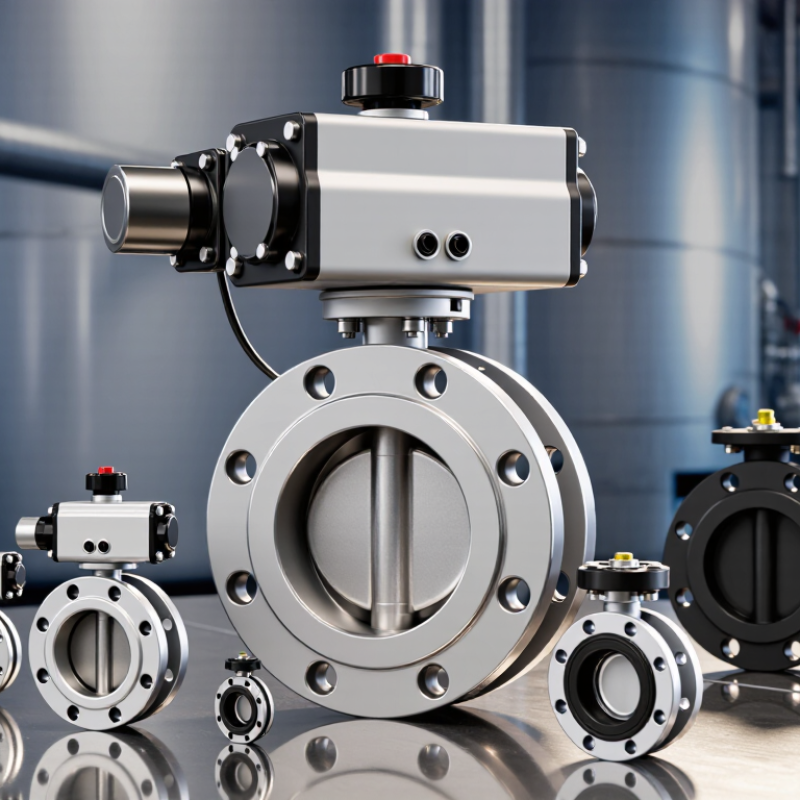
| Valve design and range | Compare concentric, double-offset, and triple-offset designs; available sizes, body materials, disc materials, seat options, and pressure-temperature limits. | Request the model-specific datasheet, drawings, pressure-temperature tables, and design standard. API 609 and EN 593 are standards covering butterfly valves. | Confirm that the offered valve model—not merely the manufacturing site—is within the stated scope of any certificate or approval. | Check whether engineering support can review process conditions, media compatibility, operating frequency, and required shutoff performance. |
| Pneumatic actuator and assembly | Compare actuator type (rack-and-pinion or scotch-yoke), spring-return or double-acting operation, torque output, operating pressure, and accessory compatibility. | Request actuator torque curves and the complete valve-and-actuator sizing calculation. ISO 5211 specifies interfaces for mounting actuators to industrial valves. | For hazardous-area applications, verify the exact actuator and accessories against the applicable approval and installation requirements. | Compare actuator selection assistance, accessory availability, spare-part identification, and support for commissioning and troubleshooting. |
| Pressure testing and quality records | Compare stated shell and seat-test procedures, acceptance criteria, traceability, and inspection documentation supplied with each order. | ISO 5208 sets requirements for pressure testing of industrial valves; API 598 is another commonly specified valve inspection and test standard. Confirm the contractually applicable edition and test criteria. | Request test reports and material certificates where specified. A standard reference alone does not prove that a particular valve passed a particular test. | Assess how quickly the supplier can retrieve serial-number-linked manufacturing, inspection, and test records. |
| Quality management | Compare documented controls for design changes, supplier quality, production inspection, nonconformities, and corrective actions. | Ask for the certificate number, issuing certification body, validity, and scope of the quality-management-system certificate. | ISO 9001 certifies a quality management system within a stated scope; it is not, by itself, product approval or proof that every valve meets a particular specification. | Review the process for handling complaints, warranty claims, corrective actions, and technical queries. |
| Application-specific approvals | Identify approvals required for the service, such as potable-water use, explosive atmospheres, or other regulated applications. | For drinking-water applications, check whether the applicable product is certified to NSF/ANSI/CAN 61 or another requirement accepted by the local authority. | For equipment used in explosive atmospheres, verify the applicable ATEX or IECEx documentation for the exact equipment and intended zone. Requirements depend on location and application. | Check whether the supplier can provide application-specific documentation and support for local regulatory review. |
| Functional safety claims | For safety-related duties, compare the stated failure modes, actuator configuration, diagnostic assumptions, and maintenance requirements. | Request the relevant functional-safety documentation and confirm that it covers the exact device or assembly and intended use. | IEC 61508 is a functional-safety standard. A SIL claim should be supported by applicable evidence and assessed as part of the complete safety instrumented function—not inferred from a general product brochure. | Compare the availability of safety manuals, proof-test procedures, and competent technical support. |
| Delivery and spare parts | Compare quoted lead time by configuration, standard versus engineered options, spare-part lists, and parts interchangeability. | Use a written quotation that identifies the valve, actuator, accessories, materials, documentation, delivery terms, and validity period. | Check whether replacement components retain the required approvals and are compatible with the installed assembly. | Compare documented regional stock, parts dispatch terms, warranty conditions, and escalation contacts; request commitments in writing. |
| After-sales and lifecycle support | Compare installation guidance, maintenance instructions, repair options, actuator servicing, and product-change notifications. | Review manuals, recommended maintenance intervals, warranty terms, and the supplier’s stated service coverage. | Confirm that service or repair work will preserve any required certification, traceability, or regulatory compliance. | Evaluate response-time commitments, language and time-zone coverage, remote support, field-service availability, and repair turnaround based on written service terms. |