
What Are the 10 Best Car Garage Lifts in 2026?
The right Car Garage Lift can turn a crowded workshop into useful space, but the best choice depends on the vehicle and garage. A low ceiling, narrow bay, or uneven concrete floor can rule out a model before price becomes relevant. Details matter. This 2026 guide compares ten popular lift options by capacity, lift style, footprint, height requirements, safety features, and stated warranty. It is designed to help home mechanics and small-shop owners narrow the field, not replace a site inspection.
Before choosing, compare the lift’s rated capacity with the heaviest vehicle you plan to raise. Check the manufacturer’s required ceiling clearance, anchor layout, and concrete specifications against your actual garage. A truck may fit between the posts yet still need more overhead space for doors, roof racks, or a raised hood. Consider whether you need a two-post lift for underbody access, a four-post lift for storage, or a portable option for occasional work. No shortcut works. Look for clearly documented safety locks, operating instructions, replacement-part support, and service availability. Product specifications and prices can change, so confirm current details directly with the manufacturer or seller. A qualified installer can assess the slab and setup before use. Some compromises remain: the most affordable lift may not suit a taller vehicle, while a high-capacity model may consume valuable space.
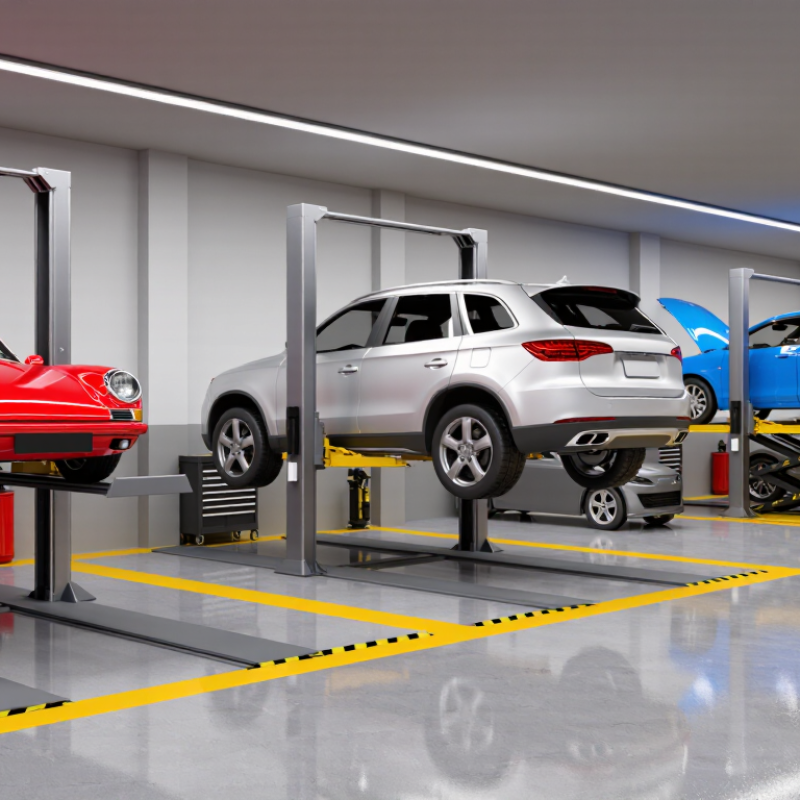
How Car Garage Lifts Work and Where They Are Used
A car garage lift raises a vehicle by transferring its weight through arms or platforms to a stable structure. On a two-post lift, adjustable arms meet the vehicle’s approved lifting points; a four-post lift supports the tires along runways. Hydraulic pressure usually provides the lifting force, while mechanical locks help hold the vehicle at working height. The operator still needs to check balance, clearance, and lock engagement. A lift can make access easier, but it does not make a poorly positioned vehicle safe.
Repair shops use lifts for tire, brake, suspension, and underbody work. Home garages may use compact models for maintenance, though ceiling height, floor strength, and vehicle weight limit what fits. The U.S. Bureau of Labor Statistics reported 805,600 automotive service technician and mechanic jobs in 2023, with 4% employment growth projected from 2023 to 2033. That workforce figure does not measure lift use directly, but it shows the scale of vehicle service work where safe access matters. Small details count: a misaligned arm pad can shift under load.
Tip: Check the lift’s rated capacity and the vehicle manual’s lifting points before raising a car. Keep people clear, raise the vehicle slightly, then pause and verify contact before lifting higher. I’d still inspect the setup twice; routine can make anyone careless. Sources: U.S. Bureau of Labor Statistics, Occupational Outlook Handbook; vehicle and lift manufacturer instructions.
